FLIPI (Follicular Lymphoma) Calculator: Deep Dive for Hematology Practice and Research
Master the FLIPI score for follicular lymphoma. Access our clinical calculator, explore survival data, and learn how to integrate risk stratification into practice.
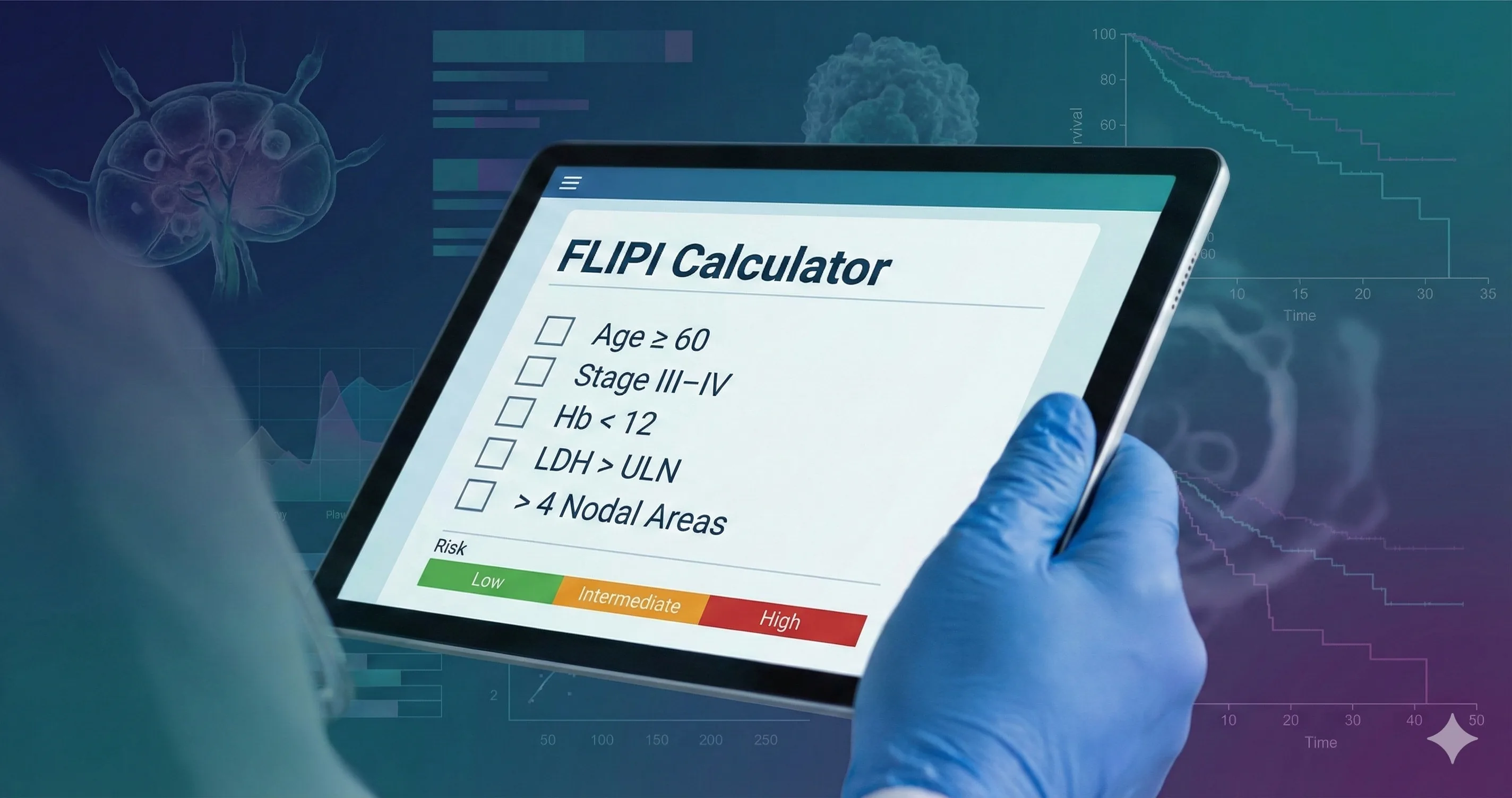
Quick Navigation
- 1. Introduction to the FLIPI Calculator
- 2. What Exactly Is the FLIPI Score?
- 3. Why FLIPI Still Matters in Contemporary FL Management
- 4. FLIPI in the Era of Advanced Prognostic Models
- 5. Inside the FLIPI Math: How the Score is Built
- 6. How the OncoToolkit FLIPI Calculator Works in Detail
- 7. Using FLIPI Within a Broader Lymphoma Decision-Support Ecosystem
- 8. Clinical Use Cases and Scenarios
- 9. Frequently Asked Questions (Advanced)
- 10. Call to Action: Embed FLIPI Into Your Global Practice
1. Introduction to the FLIPI Calculator
Follicular lymphoma (FL) is an archetypal indolent B‑cell non‑Hodgkin lymphoma, yet its behavior is anything but uniform. Some patients enjoy decades of near‑normal life expectancy, while others relapse early, transform to aggressive lymphoma, or die from progressive disease within a few years. For hematologists, hemato‑oncology specialists, and lymphoma experts, this heterogeneity makes initial risk stratification central to counseling, follow‑up, and clinical trial planning.1, 2
The Follicular Lymphoma International Prognostic Index (FLIPI) remains the backbone clinical prognostic score for adult FL and is endorsed in major international guidelines. On the OncoToolkit platform, a streamlined FLIPI calculator implements the classic five‑factor index using binary inputs only, saving all entered data locally and providing survival estimates tailored to each patient’s profile. This article explores the underlying evidence, discusses how FLIPI fits among newer models such as FLIPI24 and FLEX, and shows in detail how the OncoToolkit implementation can be used for clinical care, education, and research.3, 4
2. What Exactly Is the FLIPI Score?
2.1 Historical development and the Blood Study
The FLIPI was introduced in 2004 by Solal‑Céligny and colleagues in a landmark Blood paper analyzing 4,167 adults with FL diagnosed between 1985 and 1992. Fourteen baseline clinical and laboratory variables were evaluated; eight showed prognostic significance in univariate analysis, and five retained independent significance in a multivariate Cox proportional hazards model. To encourage adoption, the investigators simplified the model into a point‑based index with equal weighting of each factor.5, 1
2.2 The five FLIPI variables (NoLSH/NoLASH)
OncoToolkit’s calculator implements the classic FLIPI with five yes/no questions; each “Yes” contributes one point:
- Age ≥ 60 years
- Ann Arbor stage III–IV
- Hemoglobin < 12 g/dL (120 g/L)
- Serum LDH above upper limit of normal
- > 4 involved nodal areas (based on predefined nodal regions such as cervical, axillary, mediastinal, mesenteric, para‑aortic, and inguinal)6
Because the calculator uses purely binary inputs, clinicians do not enter exact age or hemoglobin values; instead, they decide whether the patient crosses the FLIPI threshold for each variable. This mirrors how the index was originally defined and avoids ambiguity around borderline values.
2.3 Risk groups and survival outcomes
The cumulative score (0–5) is grouped into three risk categories:7, 5
| Risk group | FLIPI score | Typical 5‑year OS | Typical 10‑year OS |
|---|---|---|---|
| Low risk | 0–1 | ~90% | ~70–71% |
| Intermediate | 2 | ~78% | ~50–51% |
| High risk | 3–5 | ~50–55% | ~35–36% |
Clinical Pearl: OncoToolkit’s calculator displays survival outputs adapted to each patient’s combination of adverse factors, presenting 5‑year, 10‑year, or both estimates depending on the entered profile, which helps frame long‑term expectations during counseling.
3. Why FLIPI Still Matters in Contemporary FL Management
3.1 Anchoring prognosis in a heterogeneous disease
Most patients with FL can expect a chronic, relapsing‑remitting course with long survival, but a substantial minority experience early progression or transformation, particularly those with POD24 (progression of disease within 24 months of first‑line immunochemotherapy). FLIPI does not predict POD24 perfectly, yet it remains highly informative for:2, 10, 1
- Overall survival (OS) and progression‑free survival (PFS)
- Risk of histologic transformation
- Defining baseline risk at diagnosis, a key covariate in virtually all modern FL studies9, 1
High‑risk FLIPI patients (score 3–5) consistently show significantly inferior long‑term OS compared with low‑risk counterparts, even in rituximab‑based treatment eras.11, 9
3.2 Integration with treatment decisions and GELF
Importantly, FLIPI is prognostic, not predictive. It should not be used in isolation to decide whether to treat. That decision still relies on:
- Tumor‑burden criteria (e.g., GELF), focusing on bulky disease, cytopenias, organ compromise, and symptoms.4, 3
- Disease stage and pattern (e.g., localized stage I–II disease potentially suitable for radiotherapy).
- Patient comorbidities, frailty, and preferences.
In practice, many clinicians use FLIPI as a contextual layer:
- A low‑risk, low‑burden patient might be reassured that watchful waiting is appropriate.
- A high‑risk FLIPI patient may prompt closer surveillance, earlier discussion of clinical trial options, and heightened attention to early progression or transformation.
3.3 Role in guidelines and trial design
International guidelines (NCCN, ESMO, and national bodies) continue to cite FLIPI as a recommended clinical prognostic index for newly diagnosed FL. Many trials stratify randomization arms by FLIPI category to ensure balance of risk, and registry studies routinely adjust for FLIPI to avoid confounding when comparing outcomes across centers or eras.12, 3, 4
4. FLIPI in the Era of Advanced Prognostic Models
4.1 Newer scores: FLIPI‑2, PRIMA‑PI, m7‑FLIPI, FLEX, FLIPI24
Over the past decade, several models have been developed to refine or supplement FLIPI:1, 2, 12
- FLIPI‑2: Incorporates age, hemoglobin, β2‑microglobulin, bone marrow involvement, and largest nodal diameter; focuses on PFS in rituximab‑treated patients.13, 1
- PRIMA‑PI: Uses β2‑microglobulin and bone marrow status, derived from PRIMA trial data—very simple but limited in scope.14
- m7‑FLIPI: Integrates FLIPI with mutations in seven genes (e.g., EZH2, ARID1A), offering better prediction of early treatment failure but requiring next‑generation sequencing.15, 16, 1
- FLEX: A more complex clinicogenetic model that has shown superior discrimination for 3‑year PFS and POD24 in some analyses.1
- FLIPI24: A recently published model developed from 10 contemporary cohorts to predict events within 24 months and lymphoma‑related mortality.17, 18, 19
4.2 Why FLIPI remains the clinical “workhorse”
Despite the emergence of these sophisticated models, FLIPI remains the global workhorse for several reasons:
- Simplicity: Five common variables, all available at diagnosis in virtually any practice setting.
- Robust validation: Extensive evidence across Western and Asian cohorts confirms its prognostic separation.20, 12
- Guideline integration: FLIPI is referenced by major societies and underpins risk categories in many trial protocols.
- Accessibility: It does not require molecular testing or specialized software.
5. Inside the FLIPI Math: How the Score Is Built
5.1 From Cox model to bedside index
Under the hood, the original FLIPI was derived using Cox proportional hazards regression, assigning coefficients to each variable based on their impact on OS. The authors moved to a unit‑weight index:5, 1
FLIPI score = (age >= 60) + (stage III-IV) + (Hb < 12) + (LDH > ULN) + (> 4 nodal areas)
Each term is coded 0 or 1. This simplification gains substantial practicality and reproducibility.14, 1
5.2 Survival estimation and risk visualization
Modern calculators translate curves into numeric estimates. OncoToolkit displays survival outputs reflecting classic benchmarks (71/51/36% in the original dataset).7, 5 A color‑coded bar visually maps the patient along a low–intermediate–high risk continuum.
6. How the OncoToolkit FLIPI Calculator Works in Detail
6.1 Interface and input experience
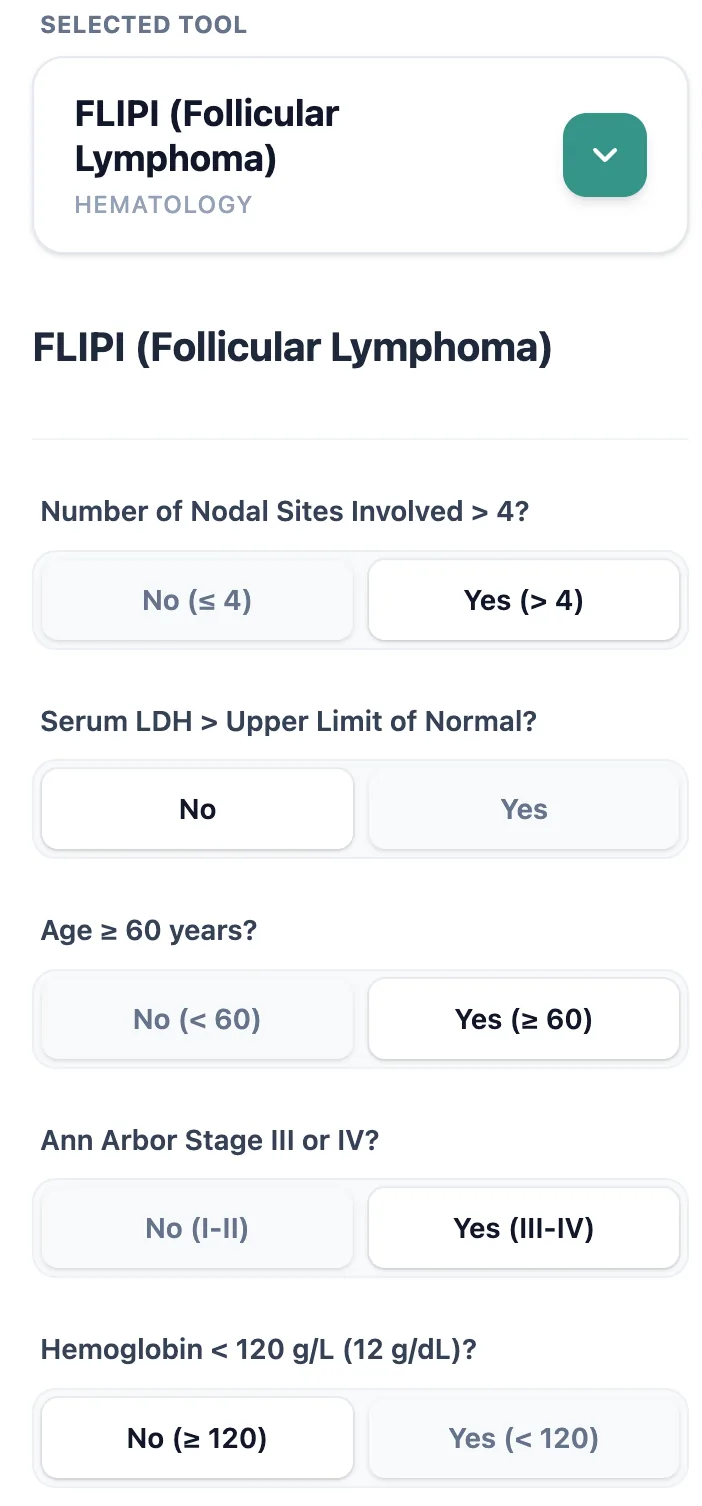
Figure 1. The OncoToolkit FLIPI calculator input form, offering five binary (Yes/No) questions corresponding to the classic FLIPI parameters.
6.2 Result display and interpretation
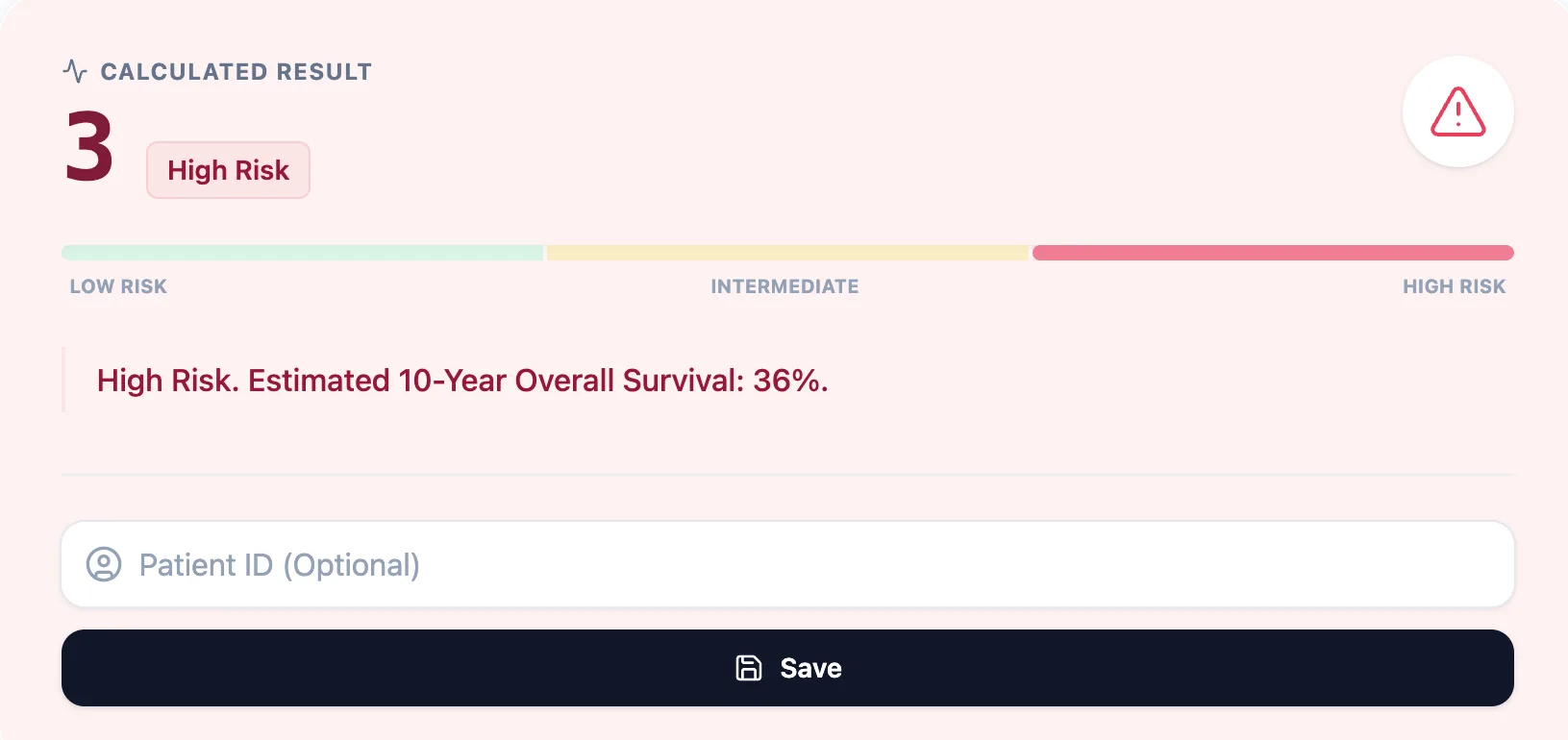
Figure 2. Example output: a score of 3 places the patient in the high‑risk category and displays an estimated 10‑year OS of 36%.
6.3 Clinical background and teaching panel
The background panel includes a concise explanation of FLIPI’s purpose, mnemonics for the five factors, and a citation of the original Blood article. It serves as a teaching tool for trainees.
6.4 Data security and local storage
OncoToolkit stores calculations locally on your device. This ensures that clinical data remains private and complies with institutional requirements for avoiding identifiable information on external servers.
7. Using FLIPI Within a Broader Lymphoma Decision‑Support Ecosystem
OncoToolkit is more than a single calculator. The FLIPI tool sits within a comprehensive hub including:
- IPI calculator for aggressive lymphomas (DLBCL)
- GELF criteria tool for assessing treatment indication in FL
- PRIMA‑PI and FLIPI‑2 for cross‑comparison
Strategic Tip: Use the GELF criteria tool to decide whether your FLIPI‑stratified patient requires immediate therapy. If the disease transforms, switch to the IPI calculator.
8. Clinical Use Cases and Scenarios
8.1 Case 1: Low-risk, low-burden disease
A 52‑year‑old woman, stage II, normal LDH, Hb 13.5. No B symptoms.
Result: FLIPI 0 (Low risk). 10‑year OS ≈ 70%.
Implication: Supports watchful waiting, reassuring the patient that long-term survival is favorable.
8.2 Case 2: High-risk FLIPI but low tumor burden
A 68‑year‑old man, stage III, Hb 11, elevated LDH, > 4 nodes. No symptoms.
Result: FLIPI 5 (High risk). 10‑year OS ≈ 36%.
Implication: Does not automatically mean "treat now" (GELF criteria not met), but mandates closer surveillance.
9. Frequently Asked Questions (Advanced)
Is FLIPI useful at relapse or only at diagnosis?
FLIPI was validated for baseline diagnosis. For relapse, emerging models like FLP‑R are more appropriate.23, 24
How does FLIPI relate to POD24‑focused tools?
FLIPI24 attempts to predict early events at diagnosis using additional labs (β2‑microglobulin). FLIPI remains the standard clinical workhorse due to its simplicity.22, 10
Can it be used in resource‑limited settings?
Yes, as it relies on common clinical data available globally without specialized molecular testing.20
10. Call to Action: Embed FLIPI Into Your Global Practice
The FLIPI score is a proven framework for understanding long‑term risk. Our calculator is designed to make this assessment effortless and accurate at the point of care.
Ready to Simplify Your Lymphoma Risk Assessment?
Use our evidence-based FLIPI calculator to stratify patients and access survival estimates in seconds.
Access FLIPI Calculator
Free to use. No registration required.
References
- Casulo C, et al. Follicular Lymphoma: Prognostic Factors and Management. PMC11899216. Source
- Relander T, et al. Prognostic Factors in Follicular Lymphoma. PMC8925692. Source
- NCCN Guidelines. B-Cell Lymphomas. PMC3643683. Source
- Medscape. Follicular Lymphoma Treatment & Management. Source
- Solal-Céligny P, et al. Follicular Lymphoma International Prognostic Index. Blood (2004). Source
- The Calculator. FLIPI Calculator Guide. Source
- ScienceDirect. Follicular Lymphoma Prognostic Index Overview. Source
- Buske C, et al. Follicular lymphoma in the elderly. PubMed. Source
- Jurczak W, et al. Validation of FLIPI in the Rituximab Era. Hematological Oncology. Source
- Casulo C. Cracking the POD24 code in follicular lymphoma. Blood (2024). Source
- Evaluation of 4 prognostic indices in follicular lymphoma. Blood Advances. Source
- Global Validation of Lymphoma Indices. PMC9005237. Source
- The Hematologist. FLIPI and FLIPI-2 comparison. Source
- PRIMA-PI: A simplified prognostic index. PMC6034646. Source
- CancerNetwork. m7-FLIPI score in predicting prognosis. Source
- Evaluation of the m7-FLIPI in clinical trials. Blood. Source
- Mayo Clinic. FLIPI24 Model Overview. Source
- FLIPI24 Development and Validation. PMC12674000. Source
- ASCO Post. FLIPI24: New prognostic model for FL. Source
- Prognostic Value of FLIPI in Asian Cohorts. PMC9522898. Source
- ScienceDirect. Early relapse and POD24. Source
- PubMed. FLIPI24 Validation Study. Source
- FLP-R: A clinical prediction model for relapsed FL. Blood. Source
- Relapsed Lymphoma Prognostic Models. ScienceDirect. Source
- CIRS and Comorbidity in Lymphoma. PMC6142481. Source
- PubMed Reference 41329901 (A). Source
- PubMed Reference 41329901 (B). Source
- YouTube. FLIPI Clinical Discussion. Source
- RegionH Research. FLIPI24 Enrichment. Source
- ASH 2023. Paper 186684. Source