Myeloma Master Panel (R2-ISS & Frailty) Calculator: Integrated Risk Stratification for Precision Treatment Decisions
Synthesizing disease biology and patient physiology into a single, actionable clinical workflow.
Quick Navigation
1. Introduction: Myeloma Master Panel (R2-ISS & Frailty) Calculator
In the evolving landscape of multiple myeloma management, clinicians face a persistent challenge: how to rapidly and accurately integrate disease biology with patient physiology to guide treatment intensity. Newly diagnosed multiple myeloma (NDMM) patients exhibit remarkable heterogeneity in both tumor characteristics and functional capacity, yet treatment decisions must often be made during time-constrained multidisciplinary team (MDT) meetings or busy clinic visits.
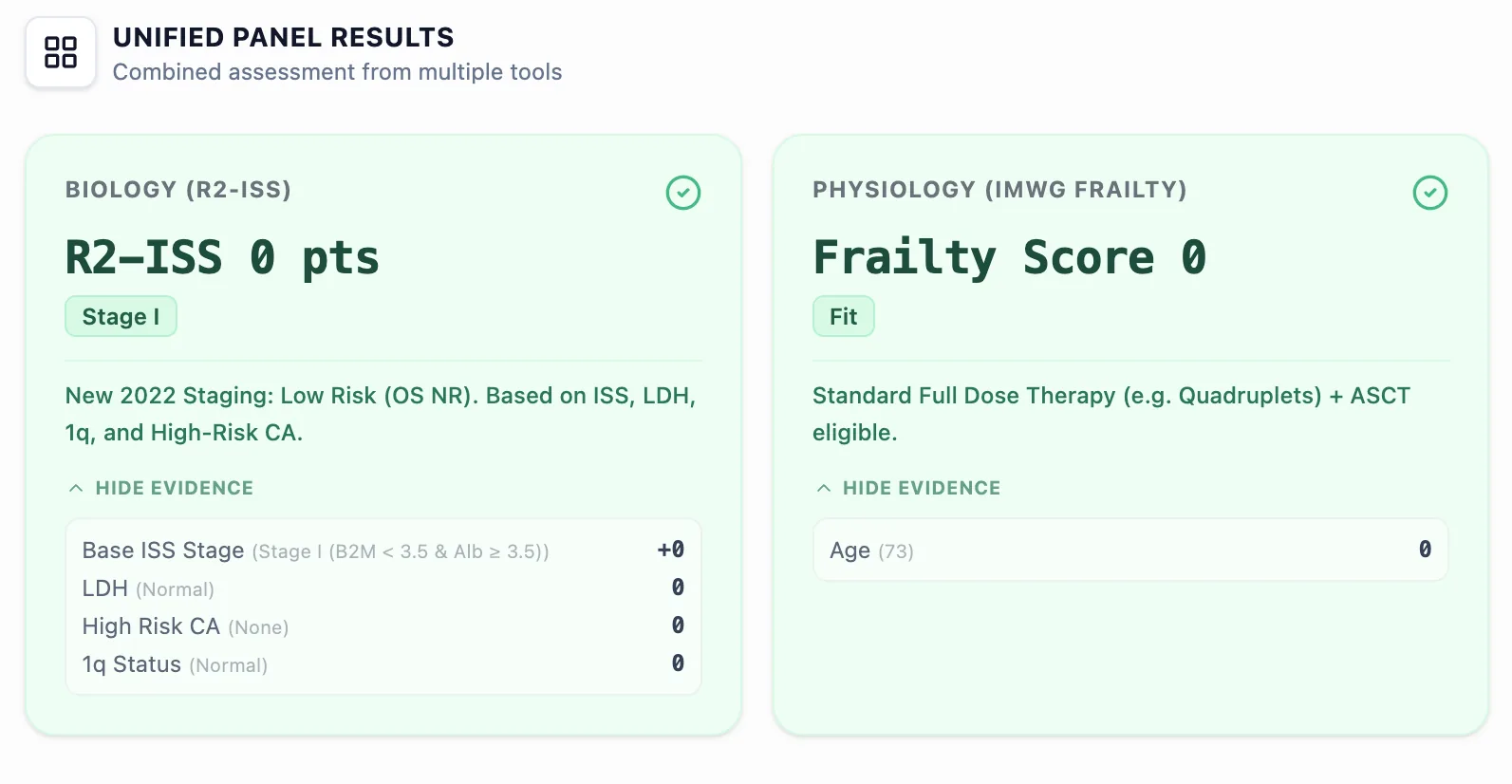
At OncoToolkit, we've built the Myeloma Master Panel (R2-ISS & Frailty) calculator to address this exact pain point. This unified digital tool synthesizes the two critical pillars of modern myeloma decision-making—disease biology (R2-ISS) and patient physiology (IMWG Frailty Score)—into a single, mobile-responsive interface.
2. What is the Myeloma Master Panel (R2-ISS & Frailty)?
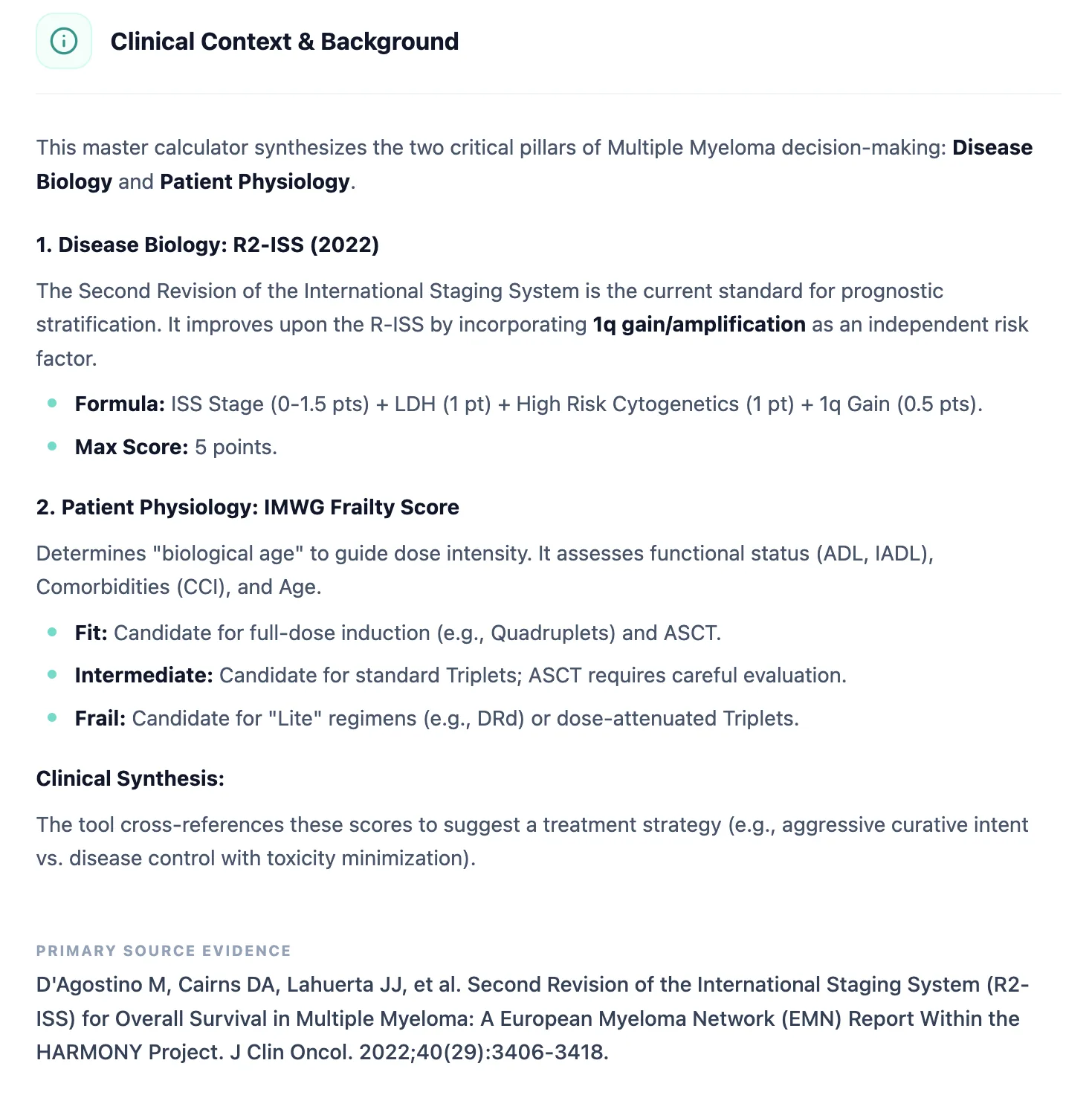
2.1. Disease Biology: R2-ISS (Second Revision of the International Staging System)
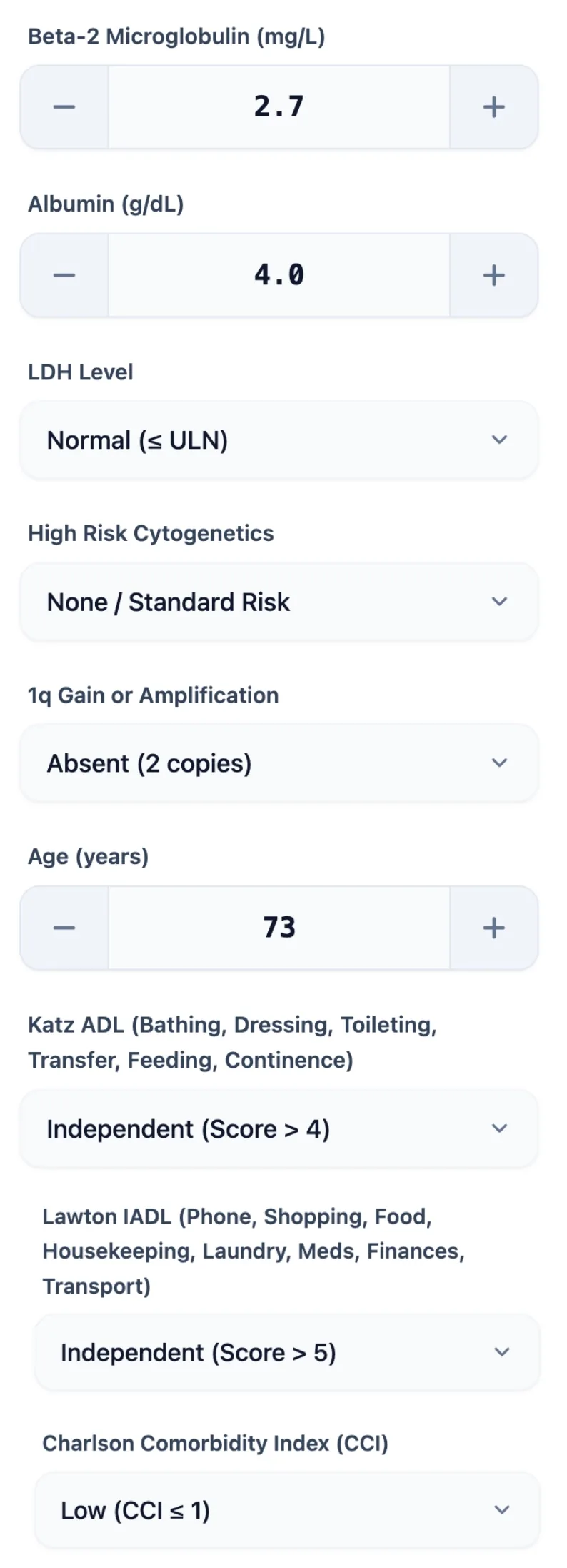
- ISS Stage (derived from serum beta-2 microglobulin and albumin): 0-1.5 points
- Lactate dehydrogenase (LDH): 1 point if elevated above upper limit of normal
- High-risk cytogenetics by FISH [del(17p), t(4;14), or t(14;16)]: 1 point
- Chromosome 1q gain or amplification: 0.5 points
2.2. Patient Physiology: IMWG Frailty Score
- Age:Chronological thresholds at 75 and 80 years.
- Comorbidities:Charlson Comorbidity Index (CCI) encompassing 17 conditions.
- Function (ADL):Katz ADL assessing six basic self-care functions.
- Function (IADL):Lawton IADL evaluating eight complex tasks.
3. Why the Myeloma Master Panel Matters in Clinical Practice
3.1. Addressing the Cognitive Load Crisis in Oncology
3.2. Precision Matching of Treatment Intensity to Patient Capacity
4. Clinical Evidence and Validation: The Math Behind the Tool
4.1. R2-ISS: Refining Intermediate Risk Through Additive Scoring
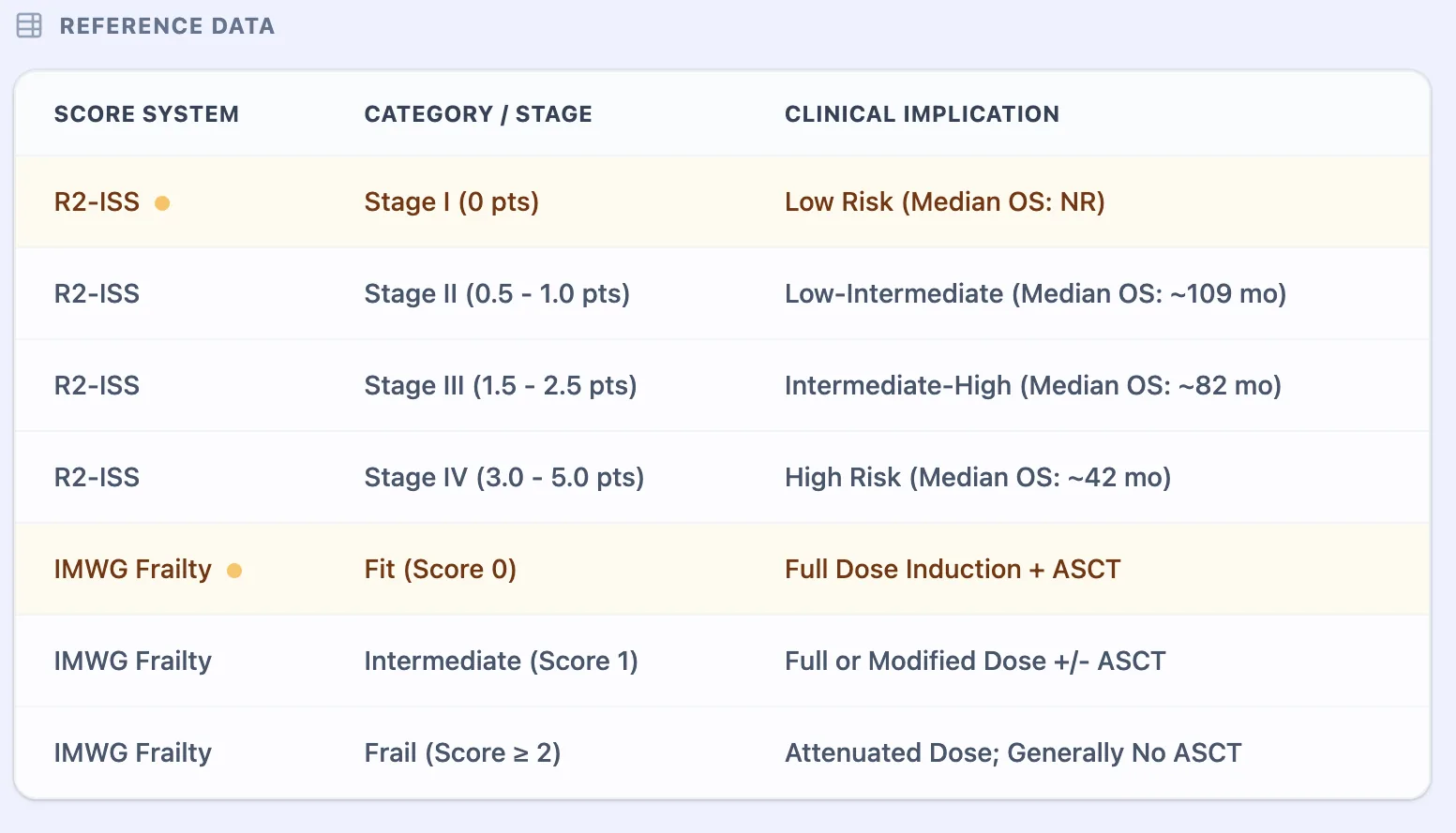
- ISS Stage I (beta-2 microglobulin <3.5 mg/L and albumin ≥3.5 g/dL): 0 points
- ISS Stage II: 0.5 points
- ISS Stage III (beta-2 microglobulin ≥5.5 mg/L): 1.5 points
- LDH >ULN: 1 point
- High-risk CA: 1 point
- 1q gain/amplification: 0.5 points
4.2. IMWG Frailty Score: Predicting Tolerance and Toxicity
5. How Our Calculator Works: From Input to Actionable Output
5.1. Step 1: Unified Data Entry
5.3. Step 3: Unified Results Display with Treatment Synthesis
6. How the Platform Supports Clinical Care, Education, and Research
- Routine Clinical Decision Support: Rapid staging during initial MDT presentation and objective frailty assessment to guide transplant referrals.
- Education and Simulation: Teaching residents the link between disease biology and patient outcomes through step-by-step scoring logic.
- Research & QI: Standardized staging to eliminate inter-rater variability and rapid identification of high-risk patients for trial enrollment.
7. Frequently Asked Questions
8. Conclusion: Streamline Your Myeloma Decision-Making Today
Ready to Simplify Your Myeloma Risk Assessment?
Use the Myeloma Master Panel
References
- 5. Multiple Myeloma Hub. Second Revision of the ISS (R2-ISS).
- 6. Multiple Myeloma Hub. Measuring frailty in MM.
- 10. Haematologica. Second Revision of the ISS.
- 11. International Myeloma Foundation. ISS & Revised ISS.
- 20. Physiopedia. Katz Index of Independence in ADL.
- 21. ScienceDirect. Lawton IADL Scale.
- 22. Wikipedia. Charlson Comorbidity Index.
- 35. ESMO. Isatuximab plus VRd in NDMM.
- 37. Scholastica. Treatment of frail myeloma patients.
- 38. AJMC. Carfilzomib-based quadruplets challenge VRd.
- 43. Nature. R2-ISS and chromosome 1q.
- 52. PMC. Myeloma in patients with renal impairment.
- 54. MedNexus. Validation of R2-ISS in Asian populations.
- 55. Iatrox. AI tools reduce cognitive overload.
- 58. NAMD. Why tracking cognitive load saves doctors.