CLL-IPI Calculator: Fast CLL Risk Stratification for Everyday Practice
Estimate CLL-IPI risk groups and 5-year survival in chronic lymphocytic leukemia in seconds with OncoToolkit’s calculator—optimize counseling and MDT decision making.
Quick Navigation
- 1. Introduction to the CLL-IPI Calculator
- 2. What is the CLL-IPI? Core Variables and Definition
- 3. Clinical Significance of the CLL-IPI in Practice
- 4. Clinical Evidence and Survival Validation
- 5. How to Use the OncoToolkit CLL-IPI Calculator
- 6. Supporting Clinical Care, Education, and Research
- 7. Frequently Asked Clinical Questions (FAQs)
- 8. Conclusion and Next Steps
1. Introduction to the CLL-IPI Calculator
Chronic lymphocytic leukemia (CLL) care has shifted rapidly with targeted agents, but prognosis and timing of treatment still hinge on integrating multiple genetic, biochemical, and clinical risk factors. For busy hematology practices, manually combining TP53 status, IGHV mutation, beta‑2 microglobulin, age, and clinical stage at the point of care is error‑prone and cognitively demanding [1], [2], [3], [4], [5].
The Chronic Lymphocytic Leukemia International Prognostic Index (CLL‑IPI) provides a standardized way to stratify patients into distinct risk groups with different survival and treatment‑free survival expectations. At OncoToolkit, we have built a dedicated CLL‑IPI calculator that makes this index immediately accessible at the bedside or in multidisciplinary team (MDT) meetings, giving you an instant score, risk category, and estimated 5‑year overall survival.
2. What is the CLL-IPI? Core Variables and Definition
The CLL‑IPI is an international prognostic index derived from large randomized trial datasets to predict overall survival and time‑to‑first‑treatment in patients with CLL. It combines five routinely available variables into a single weighted score that separates patients into low, intermediate, high, and very high‑risk groups [2], [3], [4], [5], [8], [1].
The five CLL‑IPI variables are [3], [5], [1]:
The index was developed by the international CLL‑IPI working group through a meta‑analysis of individual patient data from eight phase III trials. It is now widely used in research and increasingly referenced in guidelines as a framework for risk‑adapted management [4], [8], [1], [2], [3].
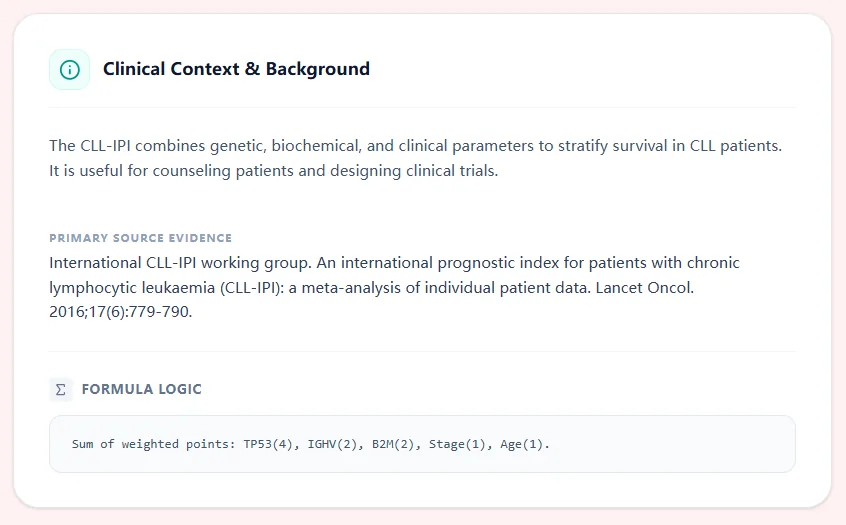
Figure 1. CLL-IPI weighted scoring model variables.
3. Clinical Significance of the CLL-IPI in Practice
Risk stratification shapes how clinicians counsel patients, set expectations, and consider early versus deferred treatment in CLL. CLL‑IPI risk groups correlate with both overall survival and risk of requiring therapy within five years [9], [7], [1], [4].
Clinical Pearl: Without digital support, applying the CLL-IPI requires remembering the specific beta-2 microglobulin cut-off (3.5 mg/L) and correctly weighing TP53 disruption as the highest point value (4 points).
4. Clinical Evidence and Survival Validation
4.1 The Scoring Math Behind the CLL-IPI
The CLL‑IPI uses a simple additive point system. Each prognostic variable contributes a weighted number of points based on its relative impact on risk [1], [2], [3], [4], [5]:
4.2 Risk Groups and 5-Year Survival Estimates
In validation cohorts, four risk groups showed clearly separated outcomes. Representative 5‑year overall survival estimates include [7], [9], [2], [4], [1]:
- Low risk (score 0–1): ~90–95% 5‑year OS
- Intermediate risk (score 2–3): ~80–90% 5‑year OS
- High risk (score 4–6): ~60–80% 5‑year OS
- Very high risk (score 7–10): ~25–45% 5‑year OS
Figure 2. 5-year overall survival probability by risk category.
4.3 Limitations and Clinical Caveats
- Developed primarily in the chemo‑immunotherapy era; performance under frontline targeted agents (BTK/BCL2 inhibitors) is still being assessed.
- Does not incorporate emerging biomarkers like complex karyotype.
5. How to Use the OncoToolkit CLL-IPI Calculator
The calculator is designed for rapid entry during patient visits. Each of the five inputs appears as a clear, tappable option:
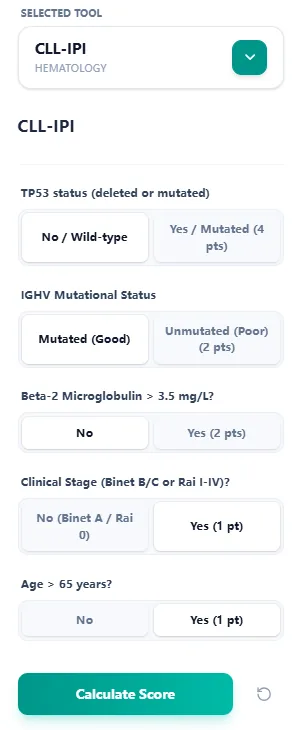
Figure 3. CLL-IPI calculator input data submission form.
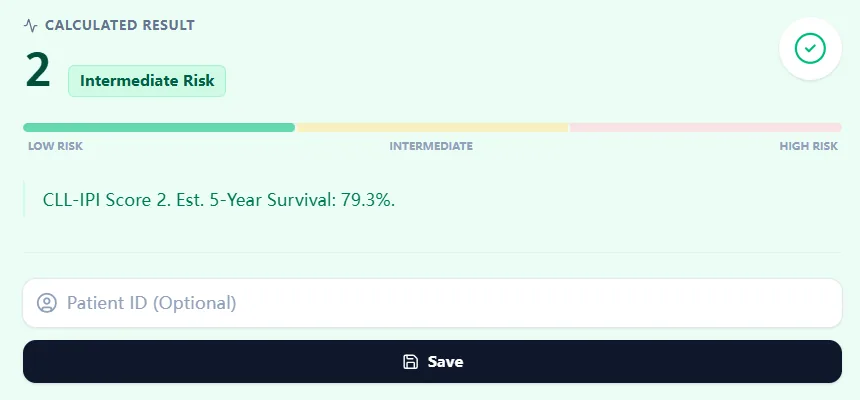
Figure 4. CLL-IPI calculator exapmle output.
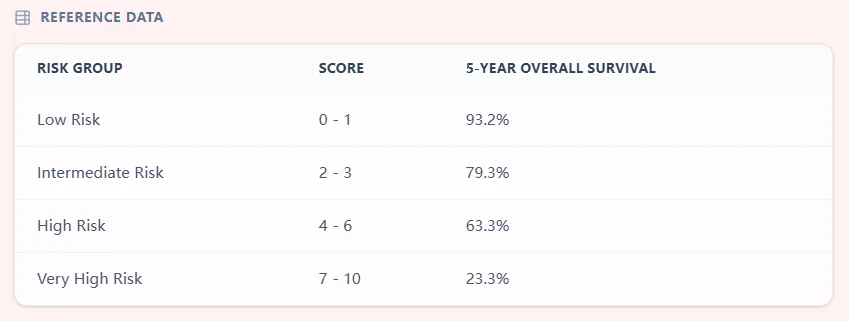
Figure 5. CLL-IPI calculator result reference table.
6. Supporting Clinical Care, Education, and Research
Routine care
Risk‑adapted counseling and consistent MDT documentation.
Education
Trainees can simulate how TP53 disruption alters risk categories.
Research
Standardized scoring facilitates retrospective analyses and quality improvement [6].
7. Frequently Asked Clinical Questions (FAQs)
When should you not use the CLL-IPI calculator?
It is a long‑term prognostic tool, not for emergency management. Avoid it when key variables like TP53 or IGHV status are missing [8], [11], [9], [4], [1].
Is the CLL-IPI validated for non-Western populations?
Validation primarily exists for Europe and North America. Use with caution in other regions where epidemiology or treatment access may differ [11], [2], [10].
Can it be used for patients already on targeted therapy?
It provides baseline risk context, but prognosis under targeted agents is an area of ongoing study [12], [10].
8. Conclusion and Next Steps
The CLL-IPI remains a cornerstone of risk assessment in chronic lymphocytic leukemia. By integrating molecular status with clinical staging, it provides a powerful framework for shared decision making and trial selection.
Ready to Simplify Your CLL Risk Assessment?
Calculate the CLL-IPI score and 5-year survival probability instantly at the point of care.
Try the CLL-IPI Calculator Now
Free to use. No registration required.
References
- International CLL-IPI working group. An international prognostic index for patients with chronic lymphocytic leukaemia (CLL-IPI): a meta-analysis of individual patient data. Source
- The Lancet Oncology. International prognostic index for chronic lymphocytic leukaemia. Source
- Targeted Oncology. Risk Stratification for Newly Diagnosed CLL. Source
- ASCO Post. International Prognostic Index for CLL. Source
- Cancer Canada. Prognosis and survival for CLL. Source
- OncoToolkit. CLL-IPI Calculator Tool. Source
- The Hospitalist. CLL Index Accuracy. Source
- American Journal of Hematology. Validation of CLL-IPI. Source
- PMC. Performance of the CLL-IPI in a real-world cohort. Source
- Cancer Therapy Advisor. CLL-IPI compared with MDACC Index. Source
- ScienceDirect. Prognostic factors in CLL. Source
- ASH Clinical News. CLL-IPI Performance in the Era of Targeted Agents. Source
- Blood Journal. Evaluation of established prognostic factors. Source
- Hematology Advisor. Diminished value of CLL-IPI. Source
- JCO. CLL-IPI prospective validation. Source