IPSET-Thrombosis (Essential Thrombocythemia) Risk Calculator for Hematologists
Risk stratification in essential thrombocythemia (ET) is central to balancing thrombosis prevention against bleeding and treatment toxicity. The IPSET-Thrombosis offers a structured way to quantify thrombotic risk.
Quick Navigation
- 1. Understanding the IPSET-Thrombosis Score
- 2. Clinical Significance in Hematology Practice
- 3. Clinical Evidence and Scoring Methodology
- 3.1 Core Formula and Point Allocation
- 3.2 Validation Cohorts and Endpoints
- 3.3 Limitations and Clinical Nuances
- 4. Using the IPSET-Thrombosis Calculator on OncoToolkit
- 5. Applications in Clinical Care, Teaching, and Research
- 6. Frequently Asked Clinical Questions (FAQ)
- 7. References
1. Understanding the IPSET-Thrombosis Score
The IPSET-Thrombosis score is a clinical prediction tool developed to estimate the risk of arterial and venous thrombosis in patients with WHO-defined essential thrombocythemia. It combines four routinely available variables: age, prior thrombosis, JAK2 V617F mutation status, and conventional cardiovascular risk factors.
In its widely used revised form, points are assigned based on age, history, and molecular status. These points are summed to generate a total score, which is then mapped to risk categories that correlate with annual thrombosis rates and guide the intensity of antiplatelet and cytoreductive therapy.
2. Clinical Significance in Hematology Practice
In everyday hematology practice, ET patients present with heterogeneous thrombotic and hemorrhagic risks. Decisions about low-dose aspirin, cytoreductive therapy, and intensity of monitoring must weigh these competing risks, often in time-pressured environments.
Clinical Pearl: IPSET-Thrombosis refines traditional "high-risk" criteria by integrating JAK2 V617F status and cardiovascular risk factors, creating four distinct tiers (Very Low, Low, Intermediate, High) for more personalized management.
3. Clinical Evidence and Scoring Methodology
3.1 Core Formula and Point Allocation
The IPSET-Thrombosis calculator directly implements the established point-based scheme:
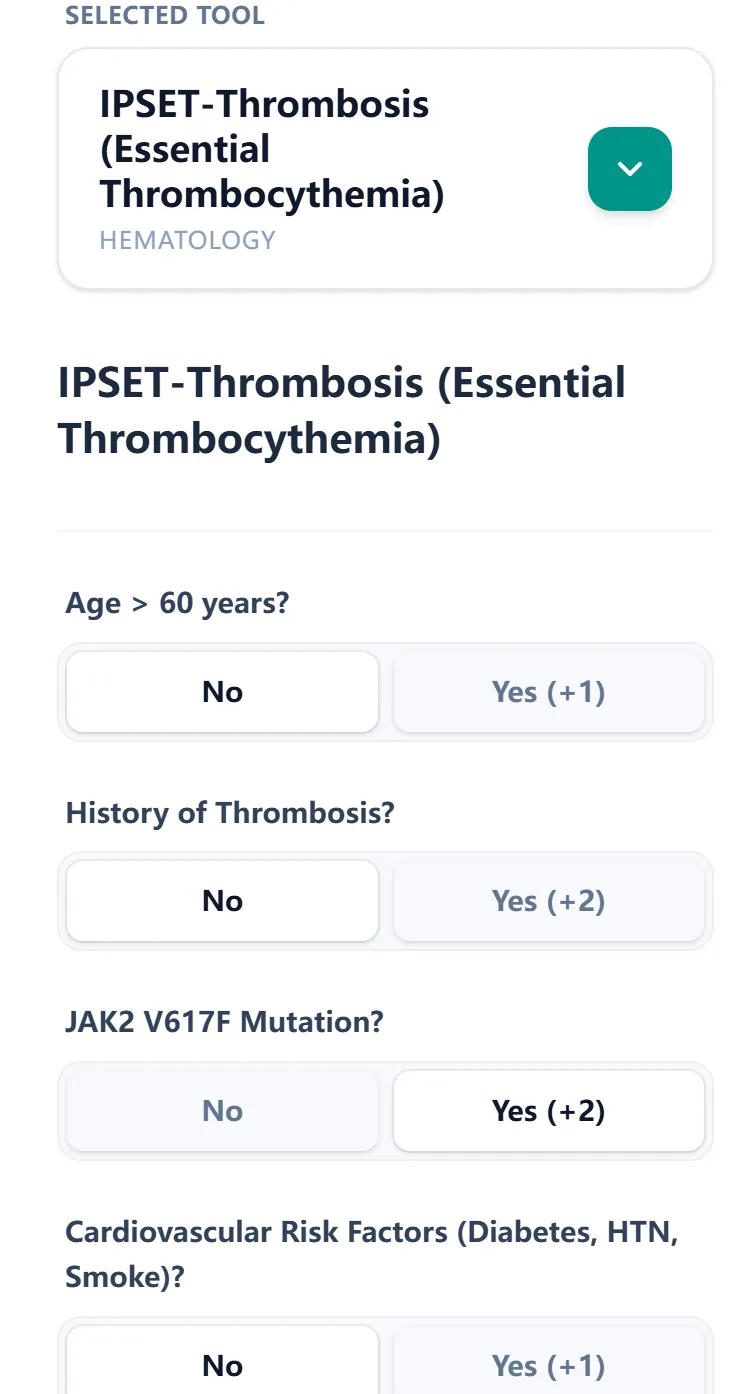
- Age > 60 years: 1 point
- History of thrombosis: 2 points
- JAK2 V617F mutation present: 2 points
- Cardiovascular risk factors (Diabetes, HTN, Smoking): 1 point
3.2 Validation Cohorts and Endpoints
The revised IPSET-Thrombosis model was derived and validated in over 1,000 patients with WHO-defined ET. Risk categories correlate with approximate annual thrombosis rates, such as around 1% per year in very low-risk patients, supporting the practice of reserving cytoreductive therapy for clearly elevated risk tiers.
3.3 Limitations and Clinical Nuances
As with any prognostic tool, limitations include:
- Extrapolation to "triple-negative" phenotypes should be cautious.
- Cardiovascular factors are aggregated rather than individually weighted.
- The score does not incorporate acquired von Willebrand disease or extreme platelet counts.
4. Using the IPSET-Thrombosis Calculator on OncoToolkit
4.1 Step-by-Step Interaction
- Select age category: Indicate if the patient is older than 60 years.
- Record prior thrombosis: Choose "Yes" if there is documented arterial or venous history.
- Enter JAK2 V617F status: Select based on molecular testing.
- Assess CV risk factors: Indicate if at least one conventional factor is present.
4.2 Mapping Scores to Risk Categories
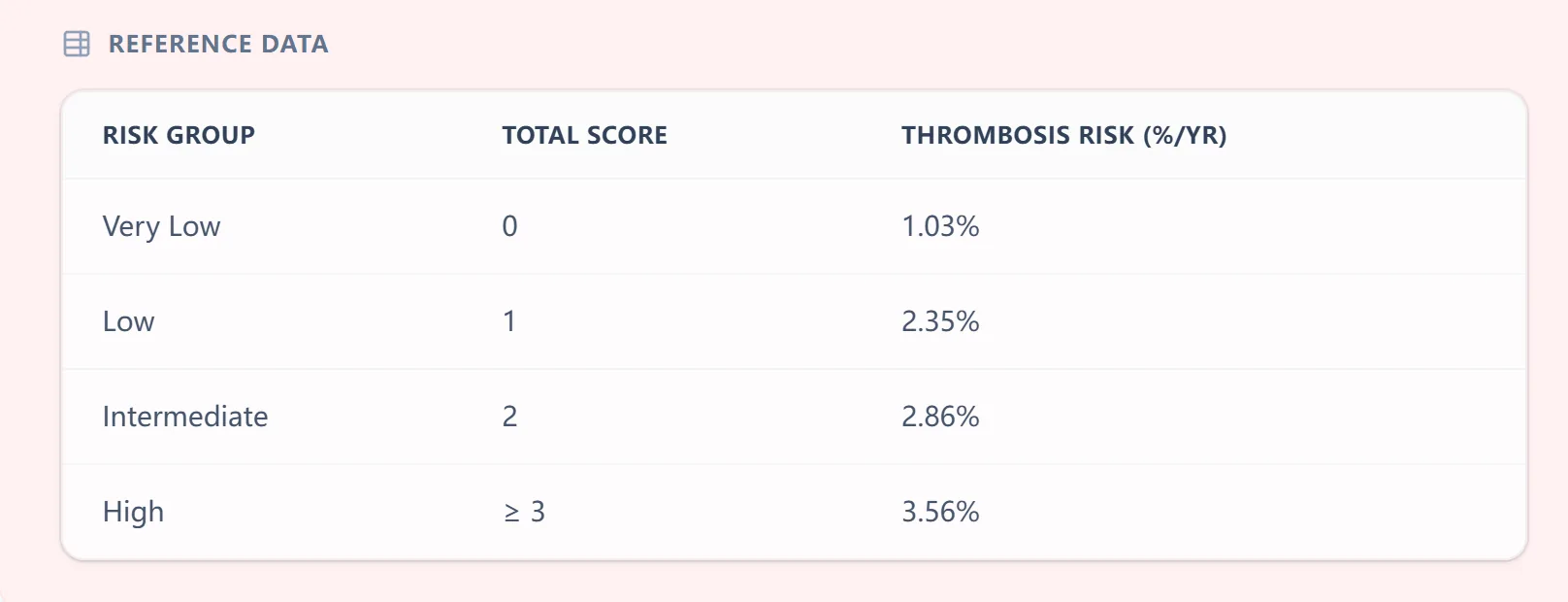
The algorithm converts the total points into standardized risk groups:
- Very low risk: 0 points (~1% annual risk)
- Low risk: 1 point
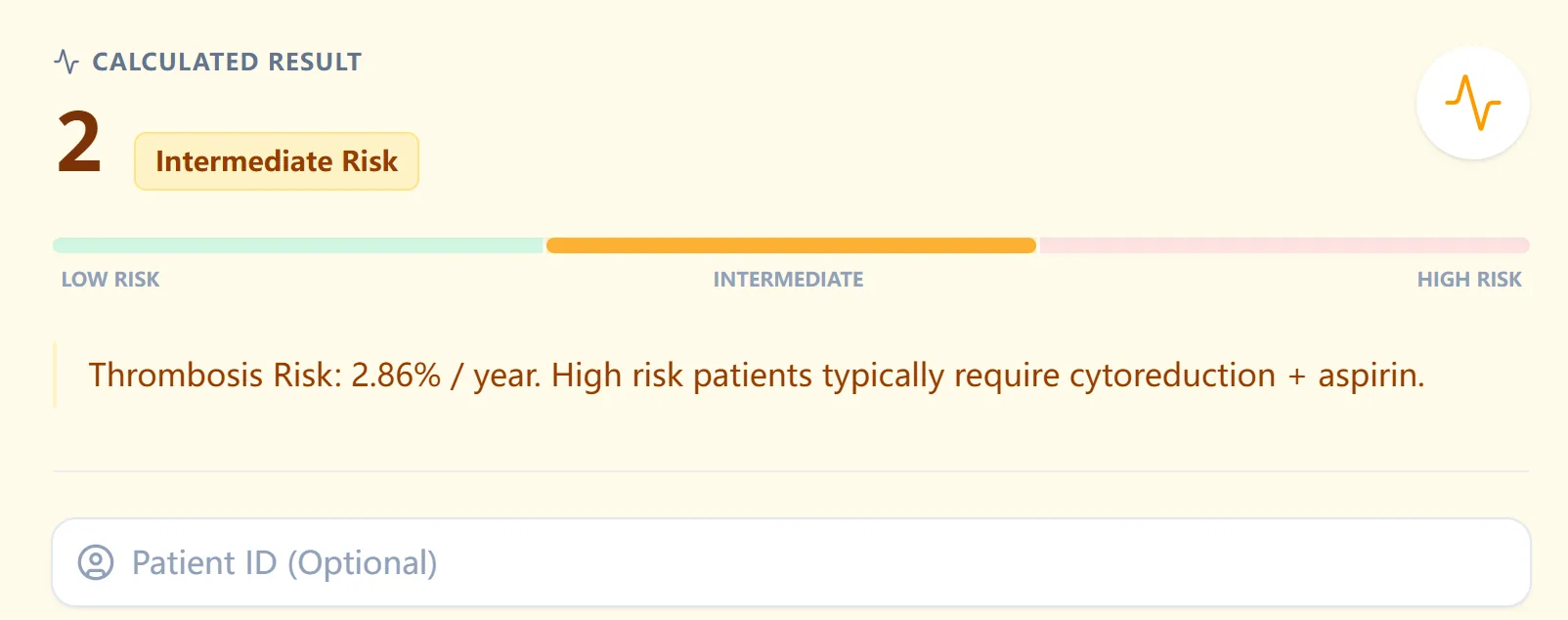
- Intermediate risk: 2 points
- High risk: ≥3 points
5. Applications in Clinical Care, Teaching, and Research
5.1 Routine Decision Support
Ideal for initial ET diagnosis visits and MDT meetings where treatment plans are debated among hematology and cardiology teams.
5.2 Education and Simulation for Trainees
Functions as a teaching aid to demonstrate how molecular and cardiovascular assessment changes the risk tier.
6. Frequently Asked Clinical Questions (FAQ)
When should you not rely solely on the IPSET-Thrombosis score?
Do not use in isolation for patients with significant bleeding history or suspected acquired von Willebrand disease.
References
- Barbui T, et al. Development and validation of an International Prognostic Score of thrombosis in World Health Organization-essential thrombocythemia (IPSET-thrombosis). Blood. 2012. Source
Ready to Simplify Your ET Risk Assessment?
Calculate precise thrombotic risk tiers and guide therapy decisions in seconds.
Use the IPSET-Thrombosis Calculator Now
Free to use. No registration required.